MOMRI Welcomes Jennifer Isidore, Expert in Afro Sonic Migrations
April 16, 2026
Olivier Urbain

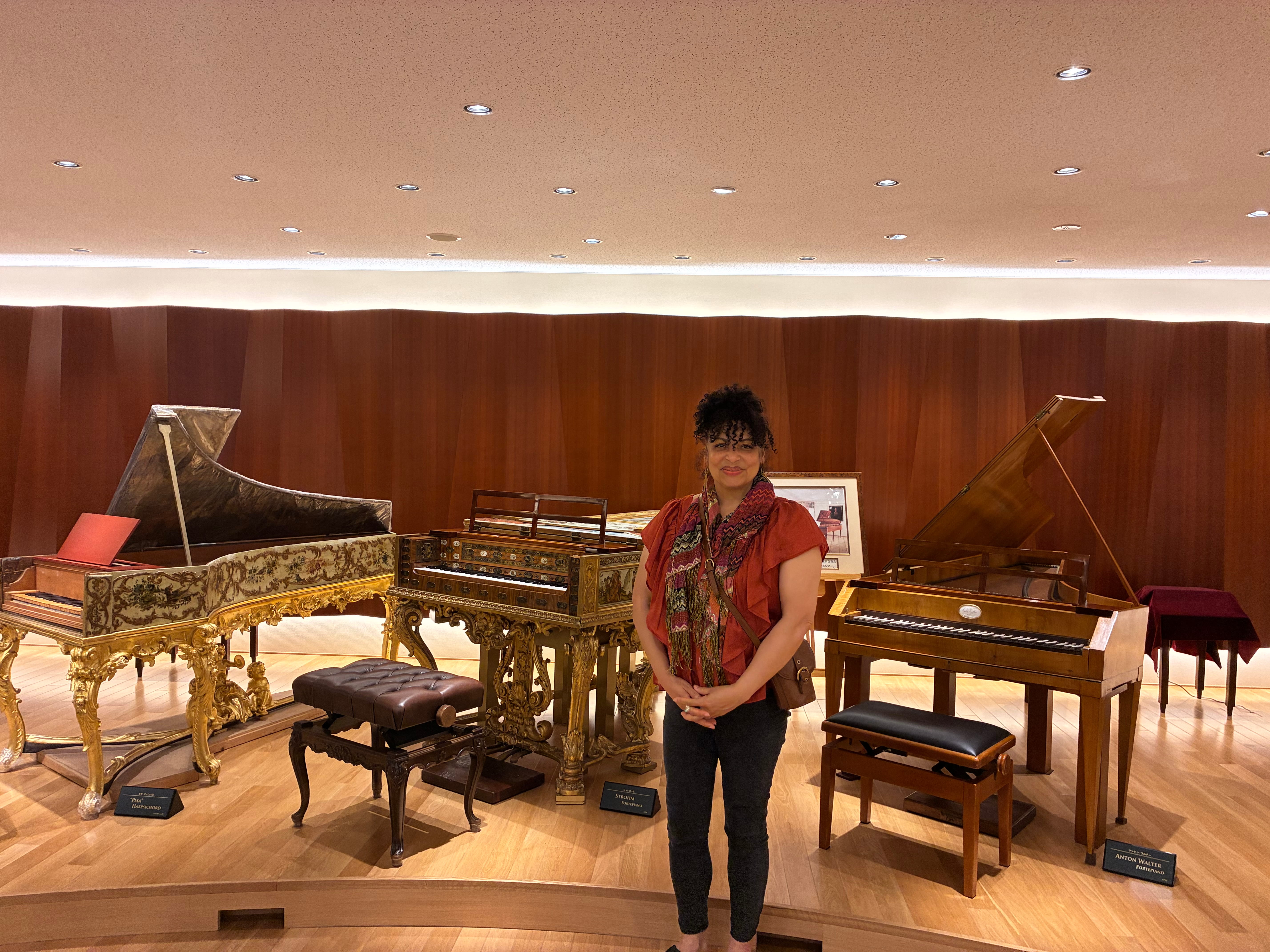
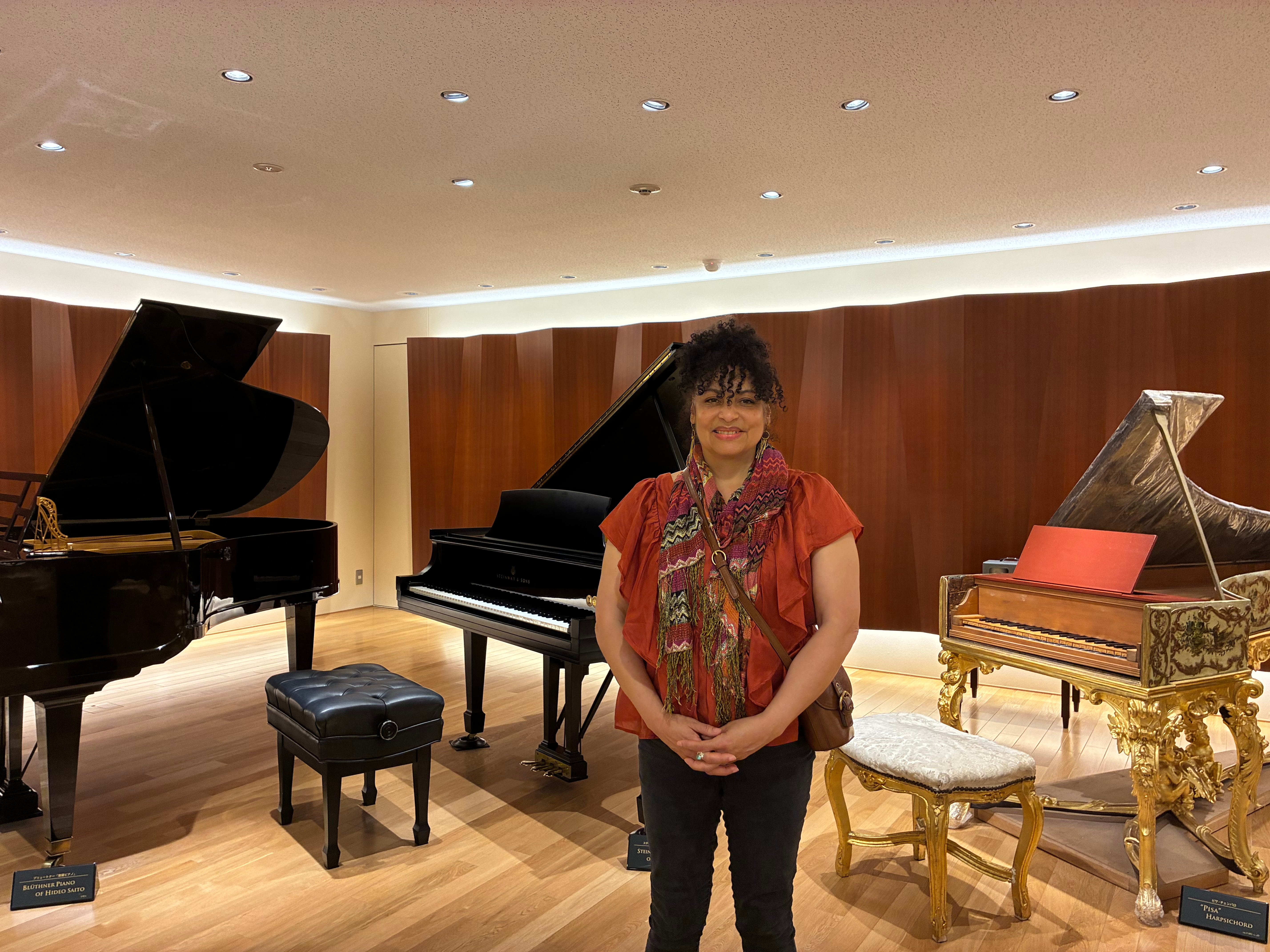
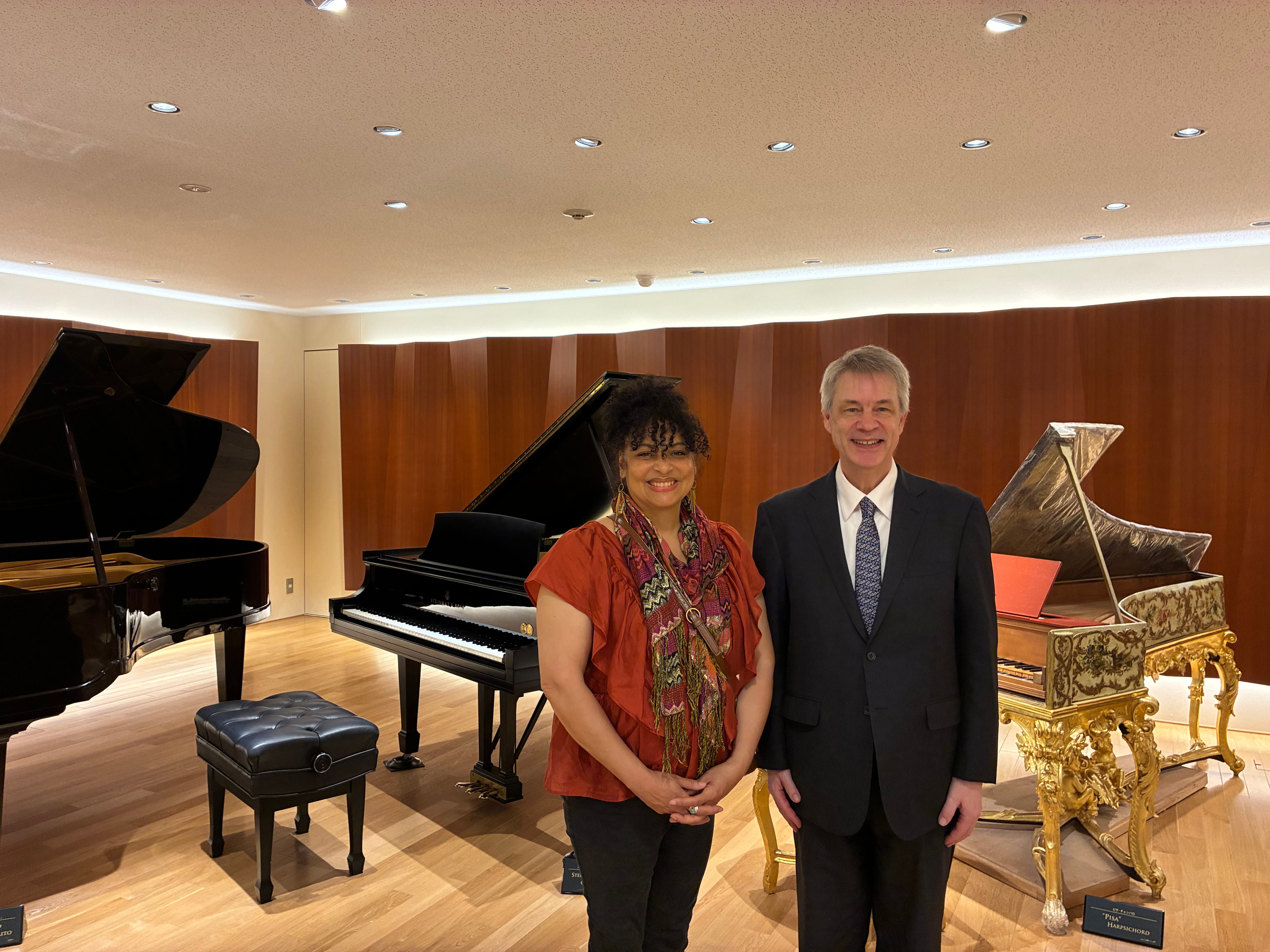
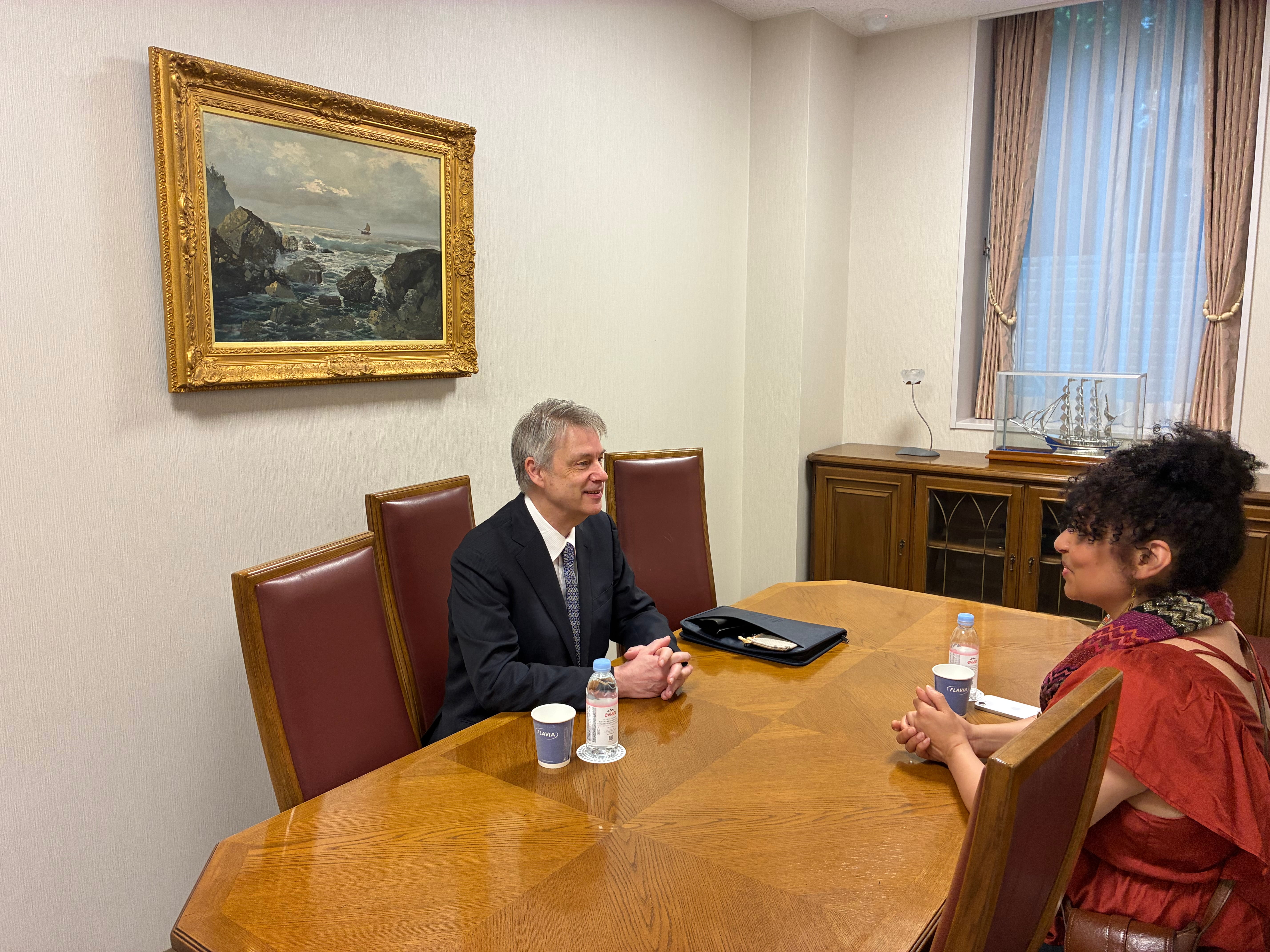
On April 16, 2026 MOMRI welcomed Jennifer Isidore, a researcher, lecturer, vocalist, musician and producer from the UK. After a tour of the antique piano room, where she especially connected with Pablo Casal’s Steinway baby grand, Jennifer held a dialogue on music in peacebuilding with MOMRI director Olivier Urbain.
Jennifer is currently pursuing a PhD at Goldsmiths, University of London, where she also teaches various classes. Her thesis is titled “Afro Sonic Migrations: Music As Resistance in British Black Diaspora.” This was at the center of the conversation, starting with the extraordinary history of the Isidore family, major musical contributors of the “Windrush Generation,” the people who came to London after WWII from the Caribbean Islands and countries.
At the end of the Windrush (1948-71), Jennifer’s grandmother and grandfather, Veronique and James Isidore, welcomed and hosted African diaspora musicians and artists at their home, including Sandra Akanke Isidore, singer and activist who worked with and inspired Fela Anikulapo Kuti; and Gregg Kofi Brown, who travelled to Britain, staying in the Isidore home and drawing on his African American roots to play with artists like Billy Cobham, Youssou N’dour, Sting, Desree, Stanley Jordan, and the band Osibisa. Jennifer’s father, Conrad Camille Isidore took part, as the first of the Isidore clan to forge a path to international success from humble beginnings, playing drums for Aretha Franklin, Manfredd Mann, Stephen Stills and Jimi Hendrix, Joe Cocker, Memphis Slim, and in his own bands, Hummingbird with Linda Lewis and Jeff Beck, and Hanson with Junior Marvin, (Bob Marley), respectively.
Also at the heart of these extraordinary musicking sessions was middle brother Reggie Isidore, drummer to Peter Green, Richard Wright, and Robin Trower. Youngest brother, Gus Isidore joined in, later to become guitarist for Thin Lizzy, Marc Bolan, SEAL, Dominic Miller and Peter Gabriel. The community that developed around this network, connected with other webs of support and human kindness, and served as the foundation for both resistance against oppression through bonding, bridging, integration, and the development of a major aspect of British culture.
To find out more about the Windrush and Jennifer’s work, we recommend the following:
- Jennifer’s short bio
- The history of the Windrush
- Jennifer’s musical production
She can be contacted by email.